Enhancing Efficiency: 3D Laser Scanning in Connecticut
Precision of 3D laser scanning in Connecticut .Introduction
In the heart of New England, Connecticut has actually constantly been a hub of development and technological development. As a designer working in the state, I have witnessed firsthand the transformative power of emerging technologies. Amongst these, 3D laser scanning has ended up being a game-changer in various sectors, from construction and producing to historical preservation and beyond. Allow me to take you through my trip of finding and making use of 3D laser scanning in Connecticut, highlighting just how it has boosted performance throughout various markets.

My Initial Experience with 3D Laser Scanning
My preliminary encounter with 3D laser scanning was both exciting and informing. It was during a job at a historic website in Hartford where the demand for accurate dimensions was essential. The conventional approaches were confirming to be time-consuming and vulnerable to human mistake. That’s when I was introduced to a 3D laser scanning expert from a local firm.
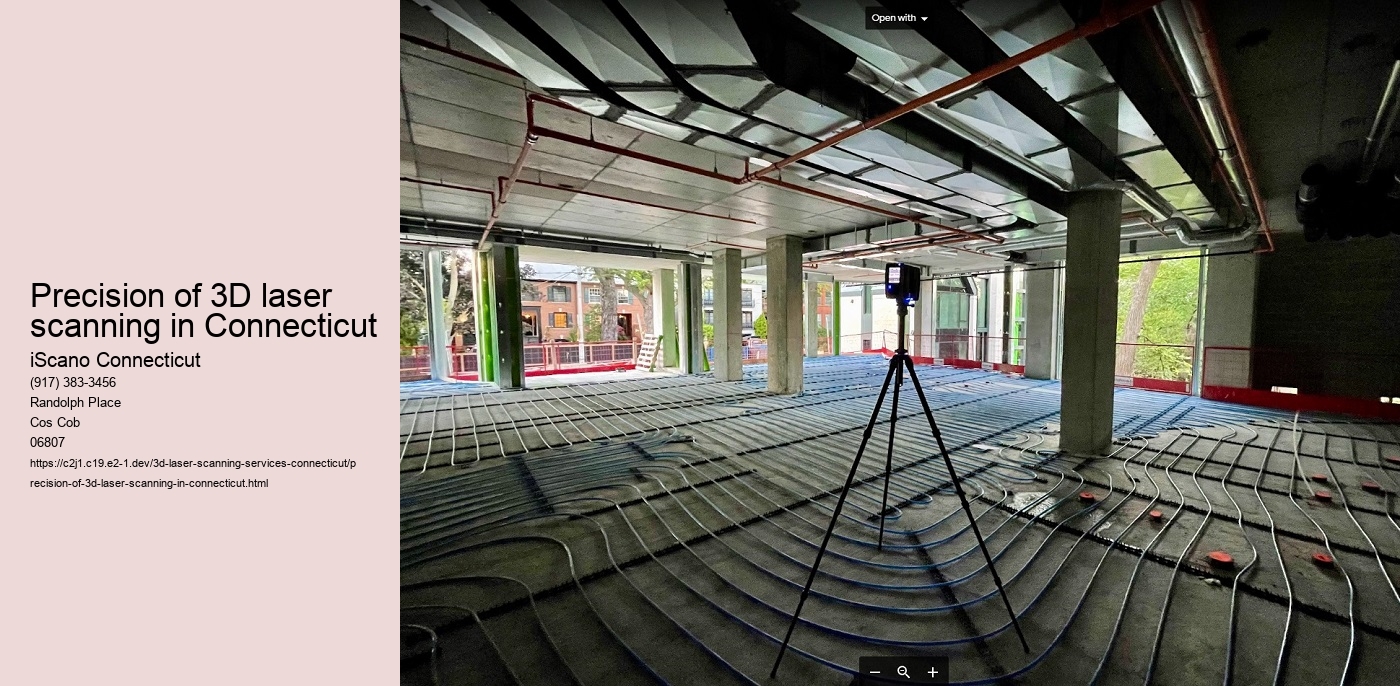
Seeing the scanner at work resembled witnessing a scene from a science fiction. The device, installed on a tripod, sent out laser beams that swept across the room, recording every minute information. Within minutes, we had an extensive 3D model of the whole space. This electronic replica allowed us to evaluate and plan the reconstruction process with exceptional accuracy. The performance and precision were beyond anything I had actually experienced previously.
Embracing the Technology in Building and construction
Motivated by this first experience, I started discovering the wider applications of 3D laser scanning in my field. In Connecticut, where building and construction tasks range from contemporary skyscrapers in Stamford to charming colonial reconstructions in Mystic, the potential for this innovation was immense.
Among the initial major projects where we executed 3D laser scanning was a business growth in New Sanctuary. The site had a number of challenges, consisting of minimal access and limited due dates. Conventional evaluating approaches would have needed numerous website check outs and comprehensive hands-on dimensions, which can have delayed the task significantly.
With 3D laser scanning, we were able to perform a total site survey in a solitary day. The scanner caught every facet of the surface, including topography, existing structures, and underground energies. The resulting 3D model gave our group with an in-depth and exact foundation for planning and layout. We might essentially explore the website, recognize possible issues, and make educated choices without the need for continuous physical inspections.
This performance not only conserved us time yet also reduced costs. By determining and attending to potential troubles early in the style stage, we prevented costly rework and delays during building and construction. The exact dimensions also made sure that products were bought accurately, lessening waste and promoting sustainability.
Transforming Manufacturing Processes
As I dove deeper into the capacities of 3D laser scanning, I realized its potential to revolutionize producing procedures. Connecticut has a rich history of production, from aerospace components to clinical gadgets. Accuracy is paramount in these sectors, and even the least inconsistency can bring about substantial problems.
I had the chance to collaborate with a leading aerospace supplier in the state. They were facing difficulties with quality control and uniformity in their production line. The standard assessment methods were labor-intensive and lengthy, frequently leading to manufacturing bottlenecks.
Introducing 3D laser scanning to their quality control procedure was a game-changer. The scanner captured in-depth 3D versions of each component, permitting exact contrast with the original style specs. Any kind of variances were promptly identified, allowing quick corrective activities. This real-time comments loophole substantially improved the uniformity and top quality of the manufactured components.
Furthermore, the digital models served as a useful recommendation for future manufacturing runs, guaranteeing that each set met the rigid market standards. The effectiveness gains were substantial, with minimized evaluation times and boosted throughput. The manufacturer reported considerable expense financial savings and enhanced customer fulfillment because of the enhanced high quality and reliability of their items.
Maintaining Connecticut’s Historical Heritage
One of one of the most satisfying elements of collaborating with 3D laser scanning has actually been its application in maintaining Connecticut’s rich historical heritage. The state is home to numerous historic sites, each with its special building and cultural importance. Protecting these frameworks calls for meticulous documents and repair initiatives.
I had the opportunity of dealing with a restoration job at a historic mansion in Litchfield. The estate, constructed in the 18th century, had complex architectural information that were deteriorating with time. Recording these information properly was vital for the restoration process.
Making use of 3D laser scanning, we produced an accurate digital replica of the mansion. Every cornice, molding, and ornamental aspect was recorded in magnificent information. This digital design served as a reference for the restoration group, ensuring that the initial workmanship was preserved. The ability to imagine the entire structure in 3D also permitted us to prepare the repair procedure extra successfully, decreasing interruptions to the website.
In addition, the digital archive produced through 3D laser scanning has lasting benefits. It functions as an irreversible document of the estate’s initial state, which can be vital for future reconstruction initiatives or for educational objectives. The innovation has confirmed to be an important device in guarding Connecticut’s historical treasures for generations ahead.
Getting Over Difficulties and Embracing the Future
While the advantages of 3D laser scanning are obvious, the trip has actually not been without its difficulties. One of the primary obstacles has been the preliminary investment in the technology. Top notch 3D laser scanners and connected software can be costly, posing a barrier for smaller companies and companies.
Nonetheless, as the modern technology comes to be a lot more prevalent, prices are progressively reducing. Additionally, the effectiveness gains and cost financial savings recognized via making use of 3D laser scanning commonly justify the initial financial investment. Many companies in Connecticut, including ours, have located that the roi is significant, making it a rewarding expense.
Another obstacle has been the knowing curve connected with running the scanners and analyzing the information. This has called for a dedication to training and specialist development. In our company, we have invested in training programs to make sure that our group is proficient in using the technology and can leverage its complete potential.

Aiming to the future, I am excited concerning the proceeded innovations in 3D laser scanning technology. Developments such as handheld scanners and drones outfitted with laser scanning capabilities are making the technology a lot more accessible and functional. These innovations will certainly better improve performance and open new opportunities throughout different industries.
Conclusion
Assessing my trip with 3D laser scanning in Connecticut, I am struck by how transformative this technology has actually been. From building and making to historical preservation, its effect has been extensive. The ability to record and examine accurate 3D information has reinvented the means we come close to tasks, bring about substantial efficiency gains and cost financial savings.
As Connecticut continues to embrace technology and technical advancement, I am certain that 3D laser scanning will play an increasingly crucial function. It is an effective device that not just enhances performance yet additionally helps us maintain our abundant background and build a lasting future. For anyone involved in markets where precision and effectiveness are extremely important, I extremely recommend discovering the potential of 3D laser scanning. It has actually absolutely been a game-changer for me and my team, and I think it can be for others too.
Below are the companies that are authority in the 3D Laser Scanning Technology
| Company Name | Business Description | Website Link |
|---|---|---|
| FARO Technologies | Provides 3D measurement, imaging, and realization solutions, including 3D laser scanning. | FARO |
| Trimble Inc. | Specializes in geospatial, construction, agriculture, and transportation solutions, including 3D laser scanning. | Trimble |
| Leica Geosystems | Offers a wide range of products and services for surveying and 3D laser scanning. | Leica Geosystems |
| Hexagon AB | Provides enterprise software and 3D laser scanning solutions for various industries. | Hexagon |
| Topcon Positioning Systems | Develops precise positioning products and solutions, including 3D laser scanners. | Topcon |
| RIEGL Laser Measurement Systems | Specializes in the research, development, and production of 3D laser scanners and systems. | RIEGL |
| Zoller + Fröhlich (Z+F) | Produces high-quality 3D laser scanners and offers software solutions for data processing. | Z+F |
| Surphaser | Manufactures 3D laser scanning systems known for their accuracy and reliability. | Surphaser |
| Creaform | Provides innovative 3D measurement technologies, including 3D scanners and software. | Creaform |
| Artec 3D | Develops and manufactures professional 3D scanners and software for various applications. | Artec 3D |