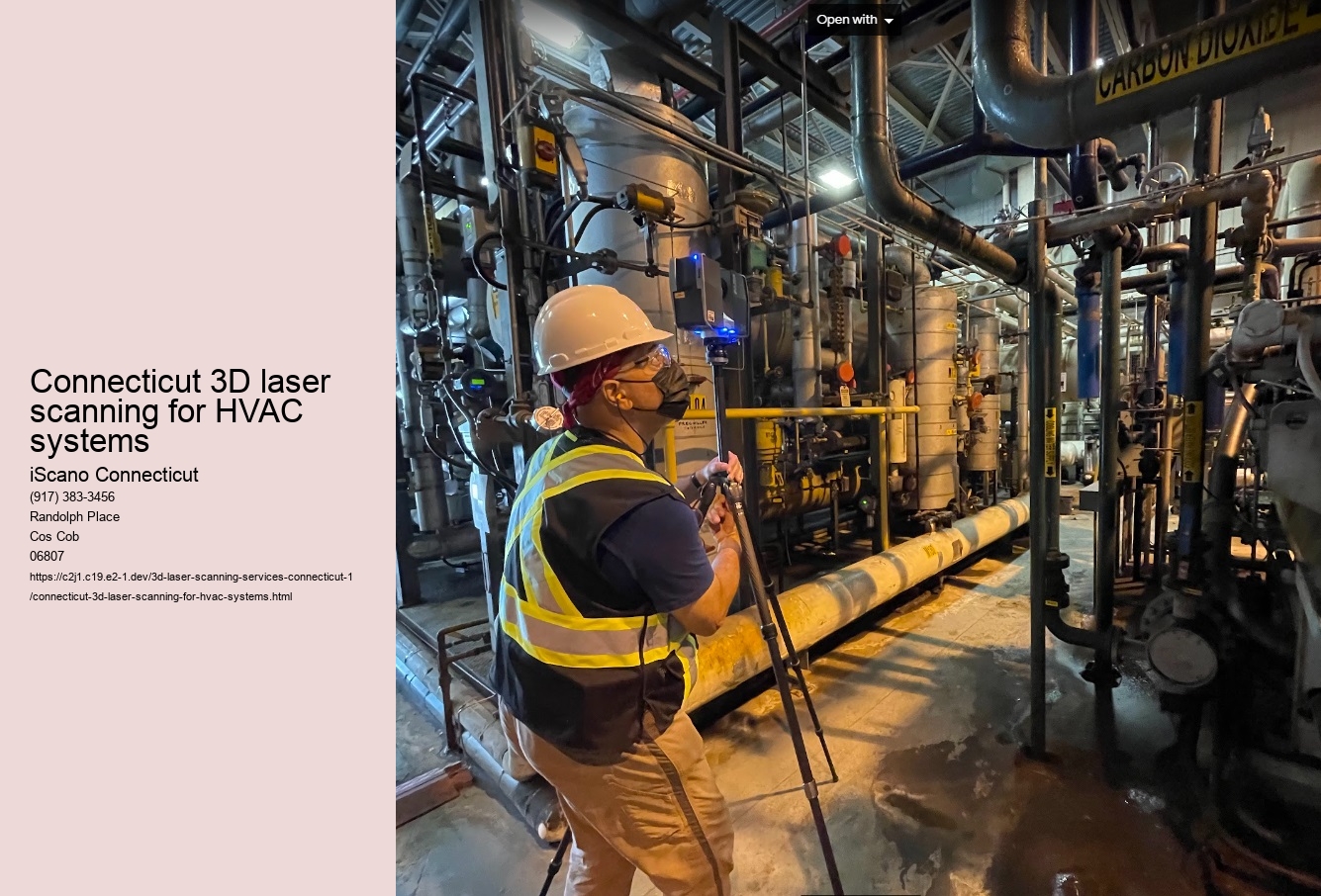
Precision Mapping: The Transformative Power of 3D Laser Scanning in Connecticut
3D laser scanning and safety inspections in Connecticut .In an age where technological advancements improve sectors at an unprecedented price, one area experiencing extensive transformation is mapping and evaluating. Among one of the most revolutionary growths is 3D laser scanning, a modern technology that's reinventing precision mapping in Connecticut. This state, with its varied topography and dense metropolitan locations, provides unique difficulties and opportunities for mapping and surveying. 3D laser scanning is attending to these difficulties, providing unequaled precision and effectiveness.
Understanding 3D Laser Scanning
3D laser scanning, additionally referred to as LiDAR (Light Detection and Ranging), is a remote sensing approach that utilizes light in the type of a pulsed laser to measure variable distances to the Planet. These light pulses, integrated with various other information tape-recorded by the air-borne system, produce exact, three-dimensional information concerning the shape and surface area characteristics of the landscape. The result is a highly thorough and accurate electronic representation of the checked atmosphere.
The modern technology functions by sending out laser light beams in the direction of a target surface. When these beams struck the surface area, they are shown back to the scanner, which gauges the moment it considers the light to return. This time-of-flight data is then used to compute the range in between the scanner and the target. By rapidly repeating this process countless times per second, the scanner builds a comprehensive 3D point cloud—-- a dense collection of points representing the scanned area.
Applications in Connecticut
Urban Preparation and Advancement
Connecticut’s city facilities, such as Hartford, New Sanctuary, and Bridgeport, benefit substantially from 3D laser scanning. Urban organizers and designers utilize this modern technology to create detailed models of existing structures and landscapes. These versions facilitate more precise planning and layout, enabling far better combination of brand-new developments with existing urban material.
As an example, 3D laser scanning can capture the intricate information of historical buildings, making sure that new advancements respect the architectural heritage of the location. In addition, it assists in the planning of infrastructure jobs like roads, bridges, and public transport systems by supplying accurate topographical information. This level of information aids coordinators anticipate prospective concerns and design services that lessen disturbances during construction.
Environmental Preservation
Connecticut is known for its abundant natural landscapes, consisting of woodlands, rivers, and seaside locations. 3D laser scanning plays a crucial function in ecological preservation efforts by supplying thorough and precise information on these all-natural attributes. Preservationists utilize this data to check adjustments in the environment, such as disintegration, logging, and environment loss.
As an example, seaside disintegration is a considerable problem in Connecticut. By using 3D laser scanning, researchers can develop detailed maps of the shoreline and display modifications gradually. This information helps in creating approaches to mitigate erosion and protect beneficial coastal communities. In a similar way, in forestry management, LiDAR technology enables the mapping of tree cover structures, assisting in the assessment of woodland health and wellness and biodiversity.
Historic Preservation
Connecticut is home to lots of historical sites and sites. Maintaining these treasures for future generations is a priority, and 3D laser scanning is a very useful device in this initiative. The modern technology allows for the creation of precise digital models of historical frameworks, capturing every detail with high accuracy.
These digital models serve several objectives. They can be used for documentation and archival, ensuring that precise documents of the structures exist even if the physical buildings are harmed or wear away over time. Additionally, the models can be used in repair tasks, providing designers and home builders with comprehensive plans that help in keeping the credibility of the initial styles.
Infrastructure Maintenance
Maintaining infrastructure is a constant difficulty for any state, and Connecticut is no exception. Roads, bridges, tunnels, and various other essential facilities call for normal inspections and maintenance to ensure safety and capability. 3D laser scanning boosts this procedure by offering detailed and precise information on the problem of these structures.
As an example, bridges undergo damage due to continuous usage and environmental factors. Conventional evaluation techniques can be time-consuming and may not constantly discover refined signs of wear and tear. 3D laser scanning, nevertheless, can promptly capture in-depth photos of a bridge's surface, identifying splits, deformations, and various other indications of damage that might be missed by the naked eye. This allows for even more positive maintenance and repair, potentially expanding the life expectancy of the framework and improving safety.
Advantages of 3D Laser Scanning
The fostering of 3D laser scanning in Connecticut brings various benefits, making it a preferred option for numerous applications.
High Precision and Information
Among the most considerable benefits of 3D laser scanning is its capability to record extremely accurate and detailed information. Conventional surveying methods, while effective, usually entail a level of estimate and can be time-consuming. In contrast, 3D laser scanning gives exact dimensions with millimeter accuracy, significantly lowering the margin of error.
Speed and Performance
3D laser scanning is incredibly quick contrasted to conventional methods. A solitary scan can record millions of data factors in an issue of mins. This speed translates to raised efficiency in data collection, allowing tasks to move on quicker. For example, surveying a big construction site that would take days making use of standard methods can be finished in a couple of hours with 3D laser scanning.
Security
Safety is a vital worry in many checking and mapping projects, especially those entailing harmful or hard-to-reach locations. 3D laser scanning enhances safety and security by enabling data collection from a range. Surveyors can run the scanners remotely, decreasing the need to physically access unsafe places.
Comprehensive Data Collection
The point cloud information generated by 3D laser scanning provides an extensive and comprehensive view of the checked setting. This information can be utilized for various analyses, including topographical mapping, volumetric calculations, and structural evaluations. The adaptability of the information allows it to be made use of across different phases of a job, from preliminary preparation to final evaluation.
Integration with Various Other Technologies
3D laser scanning data can be easily integrated with various other technologies, such as Geographic Information Systems (GIS), Building Information Modeling (BIM), and augmented reality. This assimilation improves the worth of the data by permitting it to be used in a vast array of applications. For instance, incorporating 3D laser scanning information with BIM enables even more precise and comprehensive building designs, improving building top quality and efficiency.
Challenges and Future Prospects
While 3D laser scanning offers numerous advantages, it is not without its challenges. The first expense of the devices and software program can be high, which may be a barrier for smaller sized companies or projects with restricted budget plans. Additionally, the modern technology needs specialized training to operate and analyze the data appropriately.
Data management is another difficulty. The factor clouds generated by 3D laser scanning can be large and complex, needing significant storage space and processing power. Efficiently taking care of and analyzing this data can be demanding, requiring durable IT facilities and proficiency.
In spite of these difficulties, the future of 3D laser scanning in Connecticut looks appealing. As technology developments, costs are expected to decrease, making it a lot more available to a wider series of customers. Improvements in data processing and monitoring will likewise make it easier to manage large datasets, additionally boosting the utility of 3D laser scanning.
Furthermore, continuous growths in associated fields, such as artificial intelligence and machine learning, are most likely to complement 3D laser scanning. These innovations can help automate data analysis, identify patterns, and make predictive evaluations, adding an additional layer of worth to the data accumulated via 3D laser scanning.
Conclusion
3D laser scanning is changing precision mapping and surveying in Connecticut, providing extraordinary accuracy, efficiency, and safety and security. Its applications span urban planning, environmental preservation, historic preservation, and infrastructure maintenance, among others. In spite of the obstacles, the technology's benefits make it a powerful device for a variety of tasks.
As Connecticut remains to expand and develop, 3D laser scanning will play a critical role in making sure that this growth is managed in a sustainable and reliable way. The detailed and accurate data supplied by this innovation will help organizers, designers, and preservationists make informed choices, preserving the state's all-natural and cultural heritage while advertising development and innovation.